Tango Shoes vs. Regular Dance Shoes
The biggest difference is not just in appearance, but in the sole, balance, support, and the relationship between the shoe and the floor.
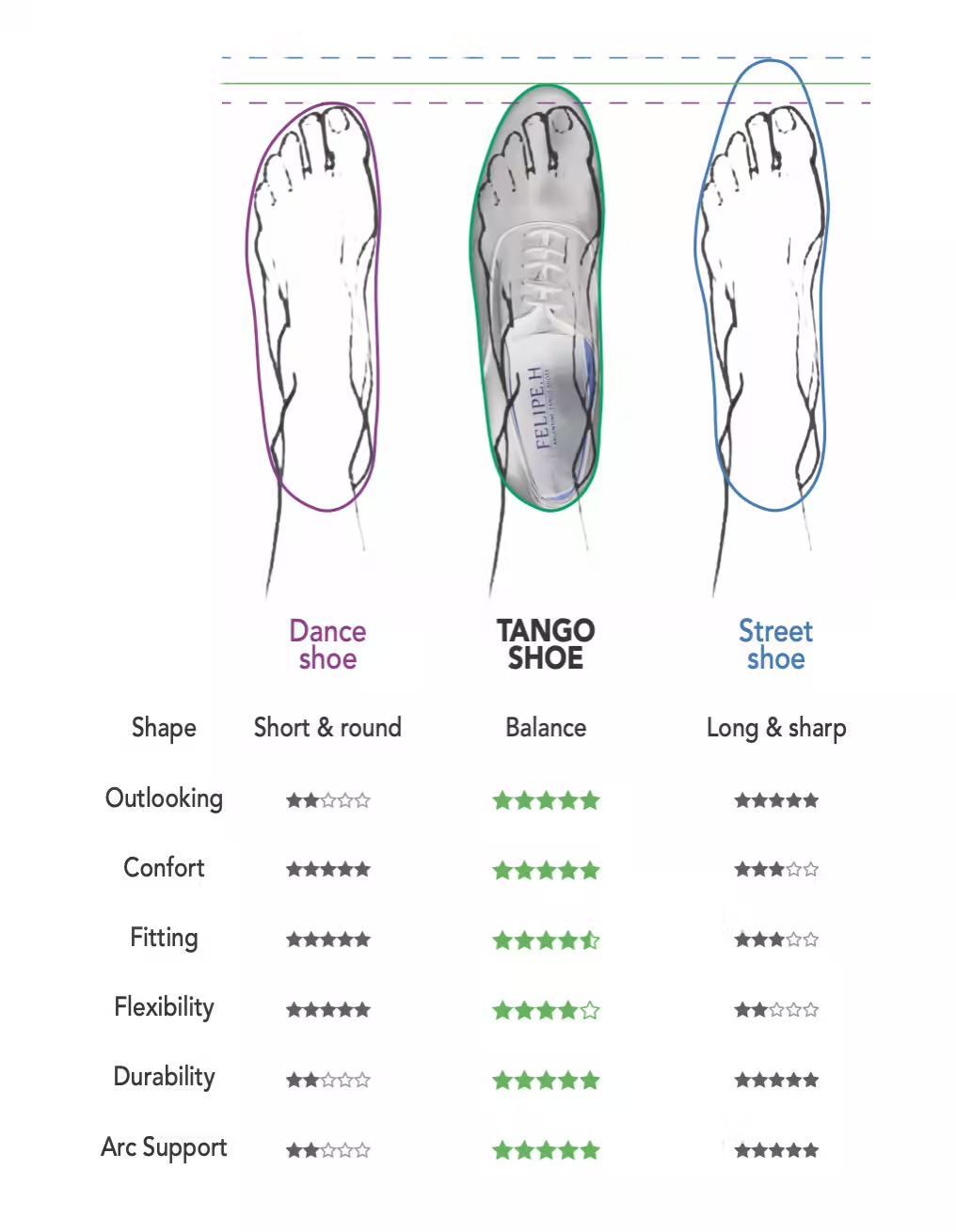
Argentine tango shoes are not simply “better-looking” dance shoes. They are designed to help dancers maintain clearer balance and more refined control while walking, pausing, pivoting, changing weight, and dancing in embrace. If you are looking for your first pair of Argentine tango shoes, understanding how they differ from regular dance shoes will make it easier to choose the right pair for yourself.
The biggest difference lies in the body language the dance requires
Regular dance shoes are usually designed for the movement needs of different dance styles, while Argentine tango shoes are more closely aligned with tango’s walking, pauses, embrace, weight changes, and improvisational interaction. For this reason, the difference between tango shoes and regular dance shoes is not only that they “look different”— they are actually made to serve different dancing bodies.
Different sole structure: tango shoes place more emphasis on support and stability
Argentine tango shoes usually place greater emphasis on overall support, allowing dancers to feel their connection to the floor more clearly while walking, turning, shifting weight, and pausing, and making it easier to maintain stability. In tango, shoes are not just meant to be “good enough for dancing”— they should help you feel grounded, move clearly, and change direction with confidence in every step.
Different balance design: tango shoes are closer to tango posture and movement
Another difference between Argentine tango shoes and regular dance shoes lies in heel height and balance placement. Tango shoes are not designed only for appearance, but to help dancers find the posture, extension, and center of balance that tango requires more naturally. Many people notice immediately when they first put on tango shoes: they do not feel like shoes that merely “allow you to dance,” but rather shoes that help bring your body into a tango state.
Different sole material: tango shoes value floor feeling and pivoting
In Argentine tango, the sole cannot simply be too sticky or too slippery. A suitable pair of tango shoes should allow you to keep delicate pivots, turns, and directional adjustments while remaining stable. What matters is not only staying on the floor, but finding the right balance between stability and glide.
Why is it not recommended to use regular dance shoes as tango shoes?
If you are only trying tango briefly, wearing regular shoes is usually fine. But if you are preparing to seriously study Argentine tango or want to practice more consistently, a pair of shoes truly designed for tango will usually let you feel the difference much sooner. When the sole support, balance placement, and floor feeling are more suitable for tango, it becomes easier to stand steadily, pivot, maintain balance, and develop the body awareness tango requires.
Women’s shoes: not only about line, but also stability and control
In women’s Argentine tango shoes, beyond the line and silhouette, special attention is given to heel stability, forefoot support, the security of straps and upper construction, and whether the shoe allows natural extension. A beautiful line should not come from endurance, but should arise naturally from stability and control.
Men’s shoes: clarity, support, and a clear sense of the floor
For male dancers, a good pair of tango shoes should make every step feel clear, light, and precise. When choosing men’s Argentine tango shoes, it is worth paying attention to whether the sole moves smoothly, whether the shoe structure feels stable, and whether it provides a clear sense of the floor and directional control.
The right tango shoes should make dancing easier
A truly suitable pair of tango shoes should make it easier to lift your feet, control your steps and direction, and dance comfortably for longer periods of time. They do not steal your attention away; instead, they help return you to the music, the steps, the embrace, and the feeling of the dance.
Who are Argentine tango shoes suitable for?
You should seriously consider a proper pair of tango shoes if you are in one of these situations:
- You are already taking Argentine tango classes regularly
- You want more stability in walking and pivoting
- You want to attend milongas or social dance events
- You want a better balance between heel elegance and comfort
- You want to move from simply “being able to dance” toward “looking and feeling more like tango”
Conclusion
The biggest difference between Argentine tango shoes and regular dance shoes is not appearance, but whether they truly support tango walking, balance, pivots, and floor connection. Because of these differences, a good pair of tango shoes does not just make you look more like a dancer— it helps you dance in a way that is closer to tango itself.
Find the tango shoes that suit you
Start with support, balance, sole feel, and real connection to the floor, and find the pair that truly fits your dance.